The short answer
In this article
01
What No Rarity means
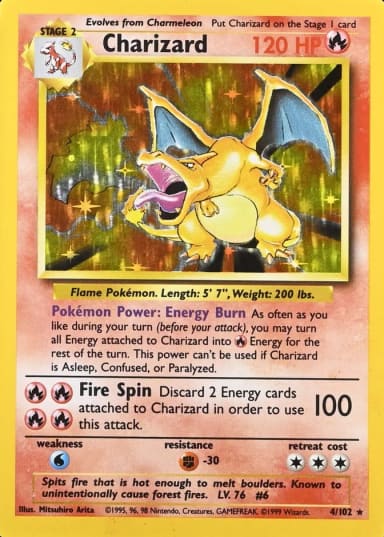
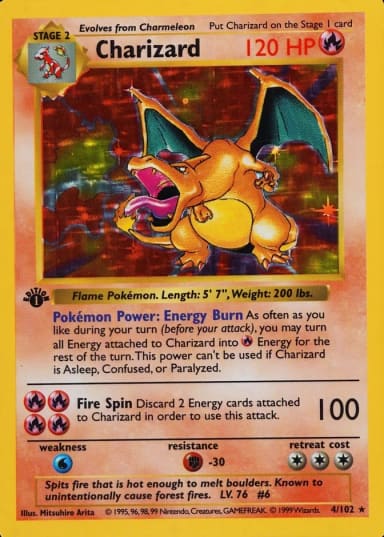
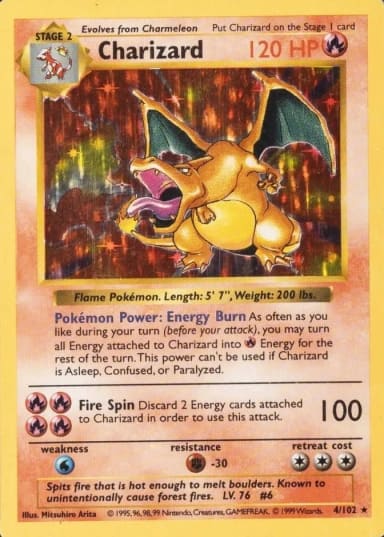
The Pokémon Trading Card Game began in Japan on 20 October 1996 with the Expansion Pack, the 102-card set that the English Base Set was later drawn from. The first print run left the factory before the rarity system was added to the cards, so nothing is printed in the lower right corner. Later runs of the same cards carry a symbol there: a circle for common, a diamond for uncommon and a star for rare.
Collectors call the first run No Rarity. It is the Japanese counterpart to the English 1st Edition and Shadowless printings, though Japan never used an edition stamp; see 1st Edition vs Shadowless vs Unlimited for the English side.
02
How to tell, on two real Charizards
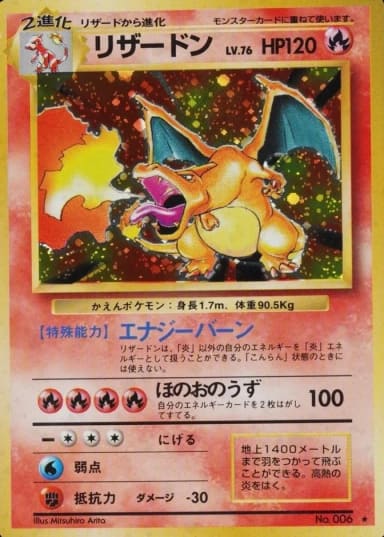
Look at the lower right corner, after the number. Japanese cards of the period are numbered by the Pokédex rather than by set, so Charizard reads No. 006 on every printing. On the first print that is the end of the line. On a later print a small symbol follows it.
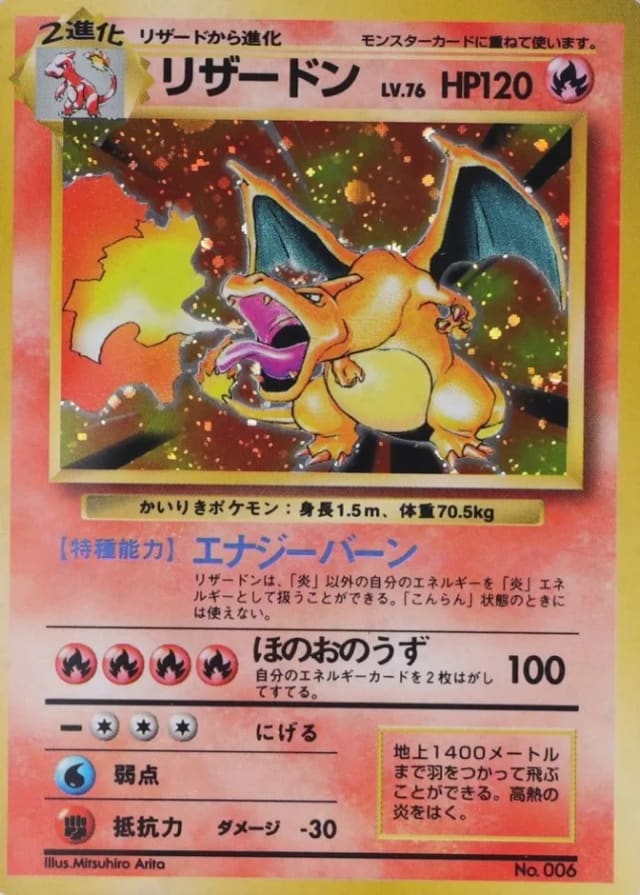
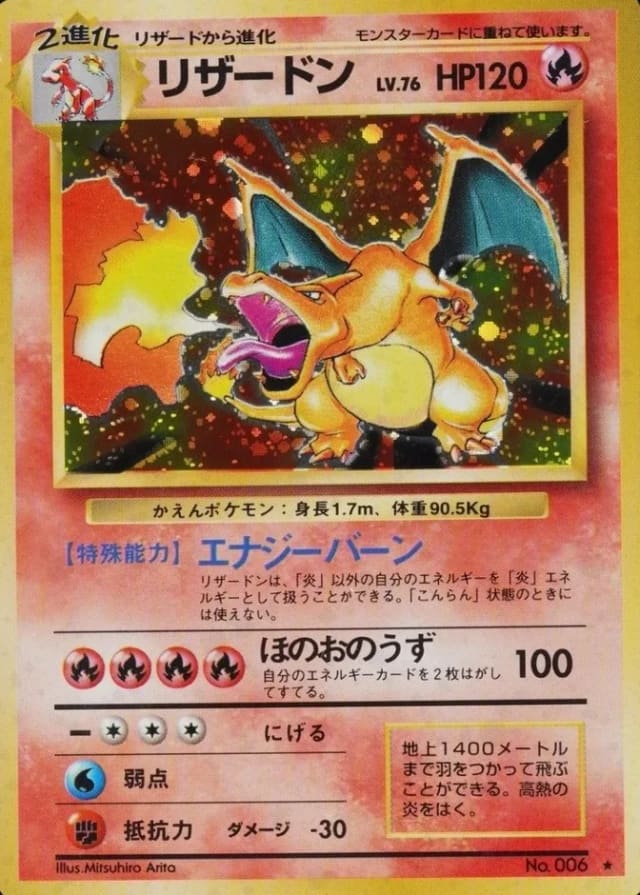
Check the corner under good light or magnification. Charizard has a second tell: its first print carries a known text error, nicknamed the Kairiki Charizard. The line under the artwork gives it かいりきポケモン, the “Superpower Pokémon” category of the Machop line, with a height of 1.5 m and a weight of 70.5 kg. Later prints correct it to かえんポケモン, “Flame Pokémon”, at 1.7 m and 90.5 kg.
03
What the label says
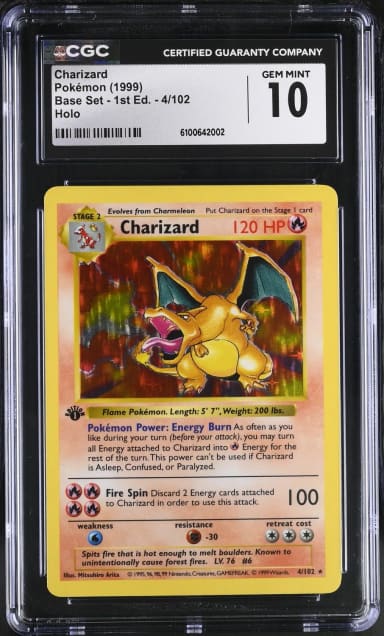
The graders name the printing on the label. Slabs Assetra has recorded read NO RARITY SYMBOL or NO RARITY on PSA labels, “Holo - No Rarity Symbol” on CGC labels and NO RARITY on Beckett labels. A label with none of these is a later print. As with any slab, the card in the case has to match its label: check the corner through the case, then follow how to verify a graded slab.
04
What each printing sells for
The two printings are separate cards on Assetra, each with its own page, sales and population: the No Rarity Charizard and the later print.
05
Beyond Charizard
The first print run covered the whole set, commons included, so the same corner check applies to every card in it. How far apart the two printings sell differs from card to card; compare them from each card’s page on Assetra, or browse the set from the Pokémon price hub.
About this article
Written and checked by Assetra. Prices and populations come from completed sales and the graders’ population reports as recorded in Assetra’s ledger; see how Assetra builds its figures. Spotted a mistake? Tell us.