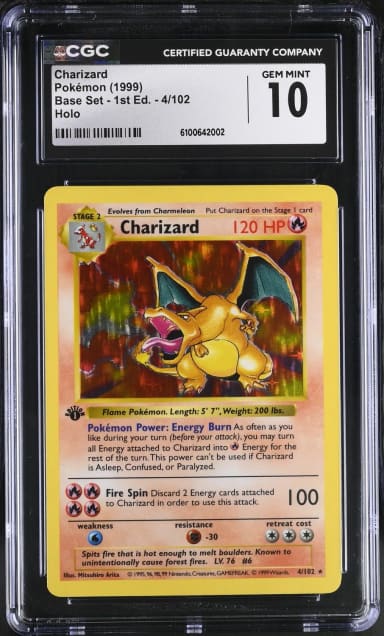
The short answer
In this article
01
Three printings of one set
Wizards of the Coast printed the English Base Set in 1999 in several runs. The first carried a 1st Edition stamp. The second used the same layout without the stamp, and collectors named it Shadowless after the detail that identifies it. The layout was then revised, and that revised design, the Unlimited printing, makes up most of the Base Set cards in existence. A later run sold mainly in the United Kingdom is dated 1999-2000 on its copyright line.
| Printing | Stamp | Shadow beside the art | Copyright line |
|---|---|---|---|
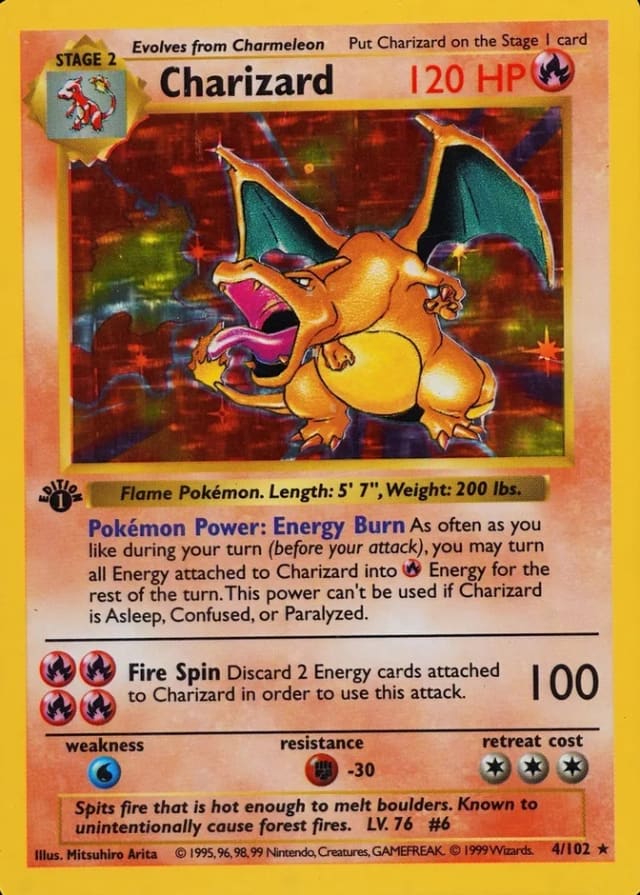
| 1st Edition | Edition 1 stamp below the left of the artwork | None | Dates read 1995, 96, 98, 99 |
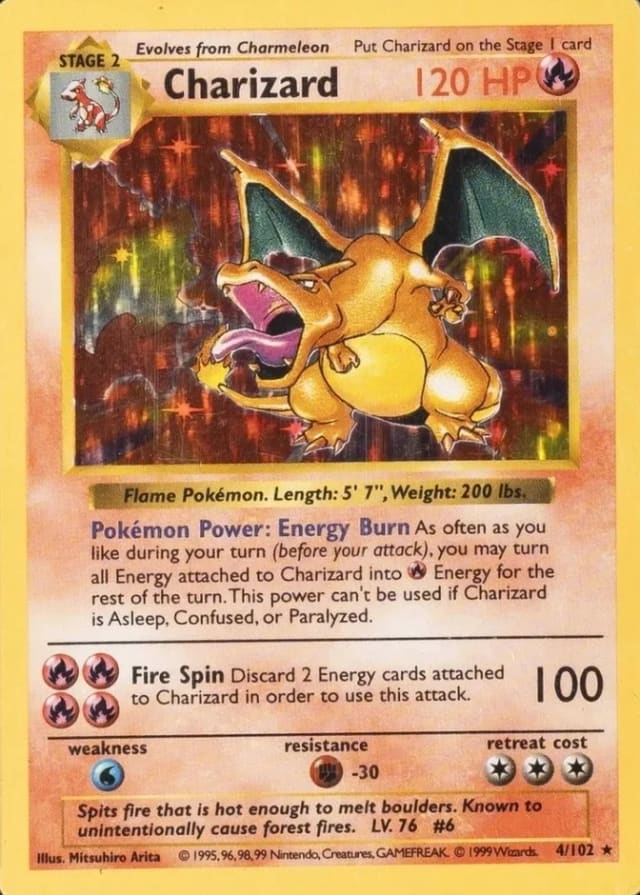
| Shadowless | None | None | Dates read 1995, 96, 98, 99 |
| Unlimited | None | Dark drop shadow on the right and lower edge | Dates read 1995, 96, 98 |
| 1999-2000 print | None | Dark drop shadow | Ends 1999-2000 Wizards |
02
How to tell them apart, on real cards
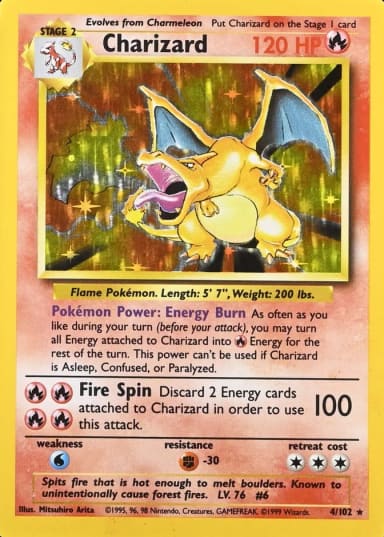
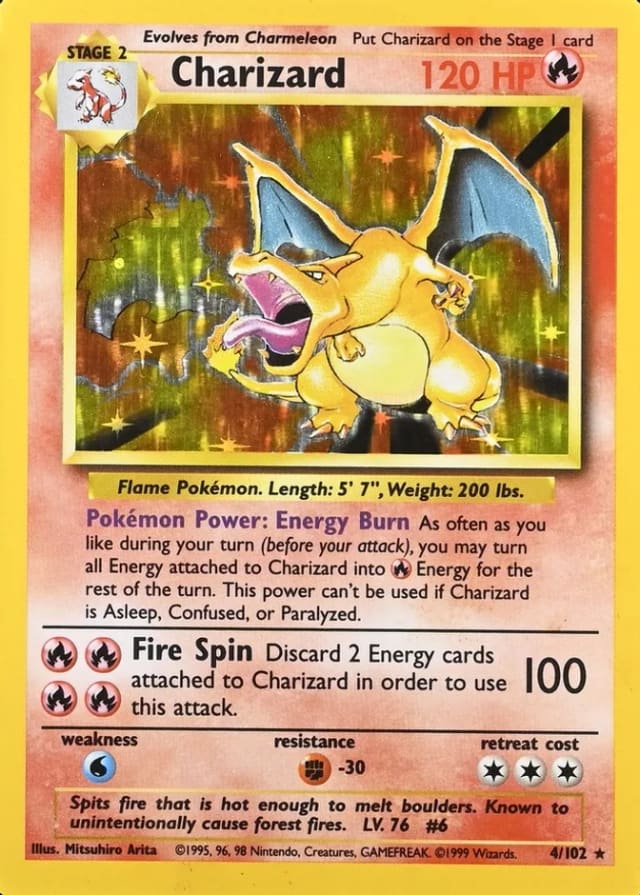
Below are three Charizards from Assetra’s own scans, one of each printing. Each number marks a detail that differs between them. Pick one and the same spot of all three cards is shown side by side, enlarged.
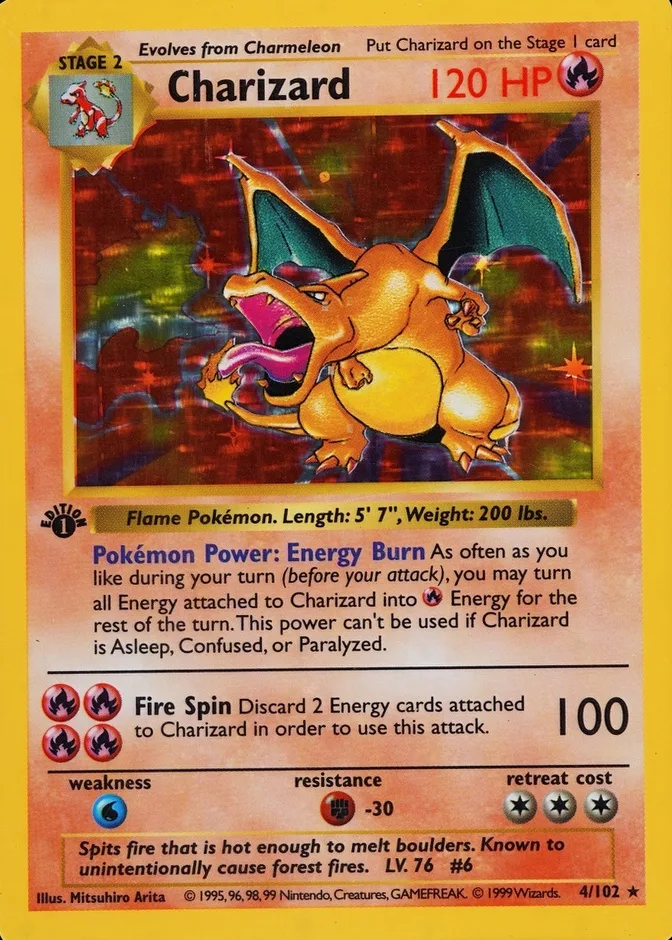
Start with the right-hand edge of the artwork frame. On an Unlimited card a dark drop shadow makes the frame look raised from the card. On a Shadowless or 1st Edition card the frame sits flat, with no shadow. The HP figure and the text are set in a thinner type on the two early printings, and the Nintendo dates on the copyright line end in 99 rather than 98.
The stamp separates 1st Edition from Shadowless: a small black circle containing a 1 with the word Edition arched over it, just below the lower left corner of the artwork. One card breaks the pattern. Every holographic English Base Set Machamp carries the stamp, because it was printed only for the two-player starter set, and it exists both with and without the shadow.
03
What the label says
PSA prints 1st Edition or Shadowless on the label of a card from those printings, and nothing extra on an Unlimited card. BGS and CGC note the printing in the same way. Read the label and the card together. Stamps have been added to Unlimited cards to pass them off as 1st Edition, so a stamped card that also shows the drop shadow is a warning sign on anything except Machamp.
A slab bought online should also pass the checks in how to verify a graded slab, which marks them on a 1st Edition Charizard in a PSA, a BGS and a CGC holder.
04
What each printing sells for
Supply sets the order. The 1st Edition run was the smallest, the Shadowless run was short and the Unlimited run was long, and the population reports show it. At the same grade the usual order of value is 1st Edition, then Shadowless, then Unlimited. These are the recorded sales for the three Charizards:
Because they are different markets, a sale of one printing says little about another, and Assetra gives each printing its own card page with its own ledger and population: the 1st Edition, Shadowless and Unlimited Charizard. The full Base Set checklist lists every printing of every card.
05
Other sets and Japanese cards
Shadowless is a Base Set term. From Jungle and Fossil onward an English set has a 1st Edition printing and an Unlimited printing and no third kind. Wizards ran 1st Editions through the Neo series; Base Set 2 and Legendary Collection had none.
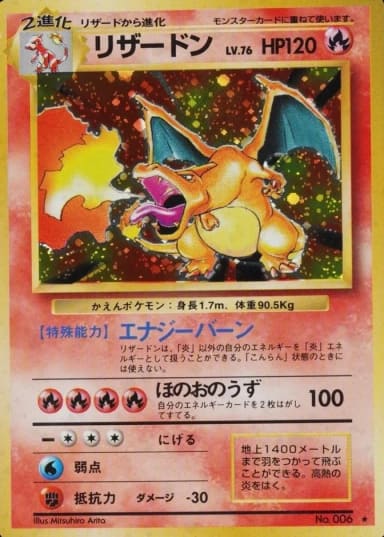
Japanese cards follow their own rules. The 1996 Japanese Expansion Pack, the set Base Set was adapted from, has no 1st Edition stamp. Its earliest print is identified by a missing rarity symbol in the lower right corner and is known as No Rarity. Japanese vs English cards covers the wider differences.
About this article
Written and checked by Assetra. Prices and populations come from completed sales and the graders’ population reports as recorded in Assetra’s ledger; see how Assetra builds its figures. Spotted a mistake? Tell us.