The short answer
In this article
01
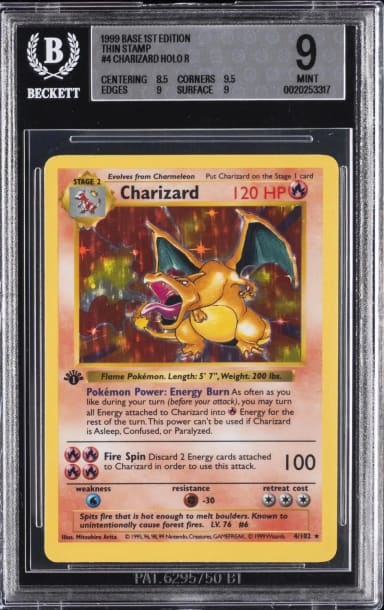
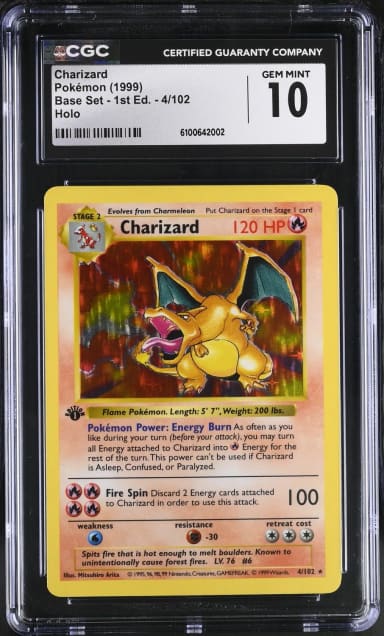
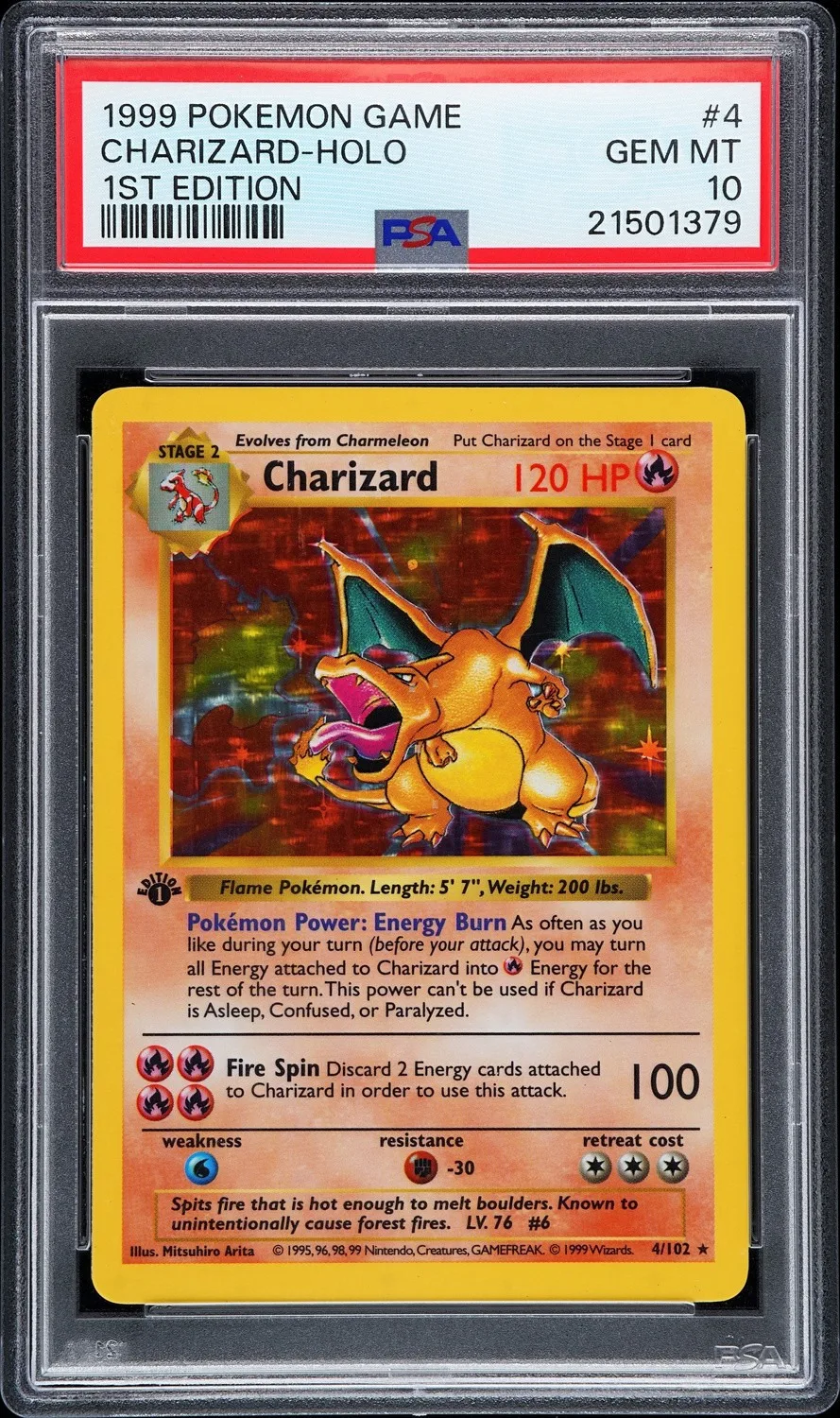
What to check, on three real slabs
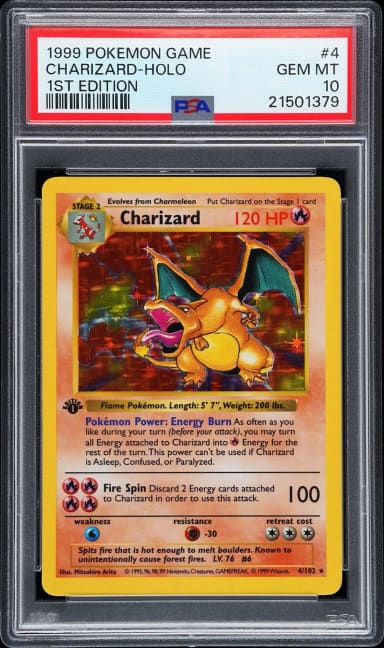
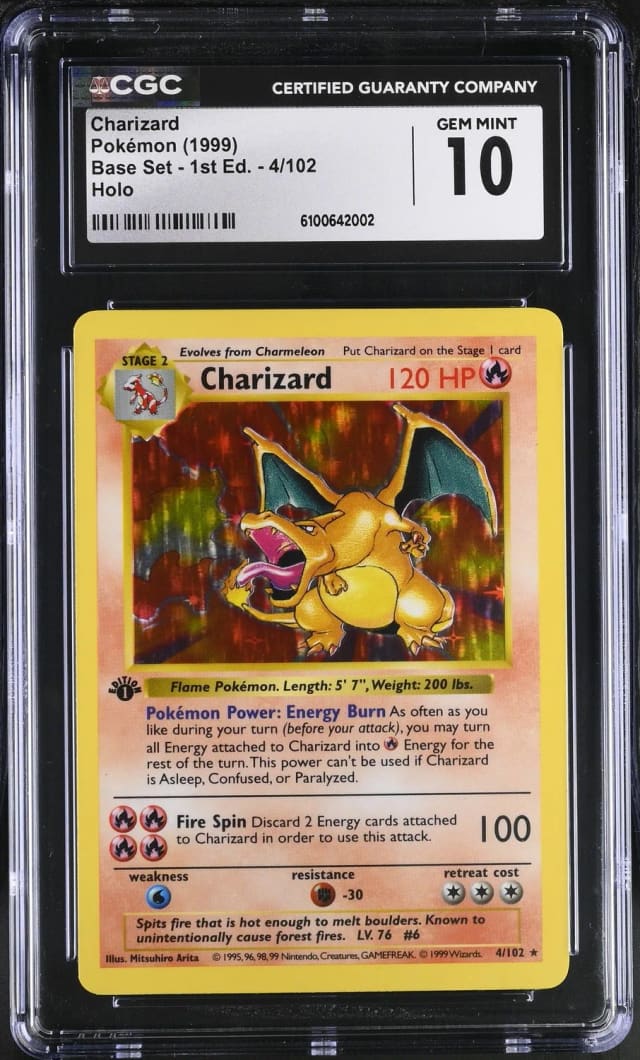
The same card, a 1999 Base Set 1st Edition Charizard, in a slab from each of the three main graders, from sales Assetra recorded. Each number marks something to check before you pay. Pick one to see it enlarged with what it should show and what would be a warning sign.
02
1. Look up the cert number
Every PSA, BGS and CGC slab carries a certification number on its label, and each company runs a free lookup on its own website: PSA Cert Verification, Beckett’s graded card lookup and CGC Cards cert lookup. Enter the number and confirm that the record names the same card, set, year, variety and grade as the label in front of you. For BGS the record also lists the four subgrades, which should match the label one by one.
A matching record is necessary but it is not enough. Counterfeit slabs are usually made by copying the number from a genuine one, so the lookup will pass. The next steps are what catch them.
03
2. Compare the card with the record
For recent submissions PSA and CGC publish their own photographs of the slab alongside the cert record. Compare them with the slab you are being offered: the centering, the position of any print dot or holo pattern, and where the card sits in the case. Two photographs of the same card agree in every detail. A swapped or counterfeit card will not.
Check that the card itself is the one the label describes. A common trick is a genuine label over a cheaper printing, such as an Unlimited card under a 1st Edition label. See 1st Edition vs Shadowless vs Unlimited for the four details that tell those printings apart, shown on real cards.
04
3. Read the label closely
Compare the label with a known genuine slab of the same grader and period: the typeface, the spacing, the colour, the barcode or QR code, and the security features the grader uses, which have changed over the years. Current PSA labels carry a holographic logo that shifts as the slab is tilted and a QR code on the back; CGC labels also carry a QR code on the back that opens CGC’s own record. On a BGS slab the label colour has to fit the grade: gold for 9.5 and 10 Pristine, black only for a Black Label. Misspellings, a blurred logo, or a grade description that does not match the number are all reasons to walk away.
05
4. Inspect the case
Grading cases are sealed shut and are not meant to open without damage. Look along the edges and corners for cracks, cloudy white stress marks, glue, or a seam that does not sit flush. These suggest the case was opened and resealed, which is how a real label ends up with a different card. A card that rattles loosely or sits crooked in the holder is another sign.
06
5. Check the price against sales
A slab offered far below what the same card and grade has recently sold for is the oldest warning there is. Look up the completed sales before you pay: search for the card here, or scan the slab and be taken to its card page.
For an expensive slab, buy through a marketplace with an authenticity guarantee or a buyer protection policy, pay by a method that can be disputed, and ask the seller for a photograph of the slab beside a handwritten note with the date.
07
What these checks cannot prove
- That this slab is the one in the record. A lookup confirms a number exists and what was graded under it. A copied label carries a real number, which is why the photo comparison matters more than the lookup.
- That a well resealed case was never opened. A careful job can leave no mark you can see in photographs. Inspect expensive slabs in hand, under a strong light.
- That the grade is right. A grade is the grader’s opinion on the day. The checks here test authenticity, not whether you agree with the 10.
- That the seller owns it, or will send it. A genuine slab can still be photographed from someone else’s listing. That risk is handled by how you pay and where you buy, not by the slab.
If anything fails, the grader’s customer service can confirm a cert or a label in person, and the marketplace’s dispute process is the place for a slab that arrived different from its listing.
About this article
Written and checked by Assetra. Prices and populations come from completed sales and the graders’ population reports as recorded in Assetra’s ledger; see how Assetra builds its figures. Spotted a mistake? Tell us.