The short answer
In this article
01
The grading difference
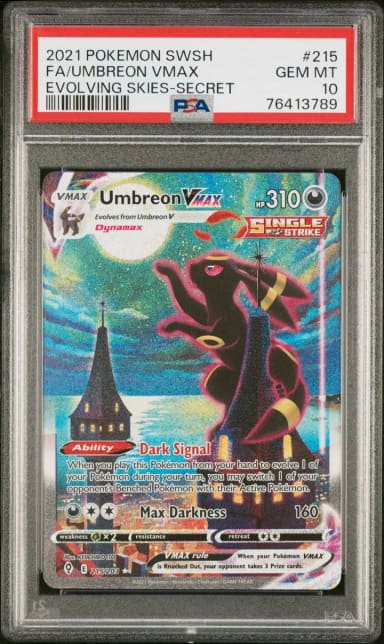
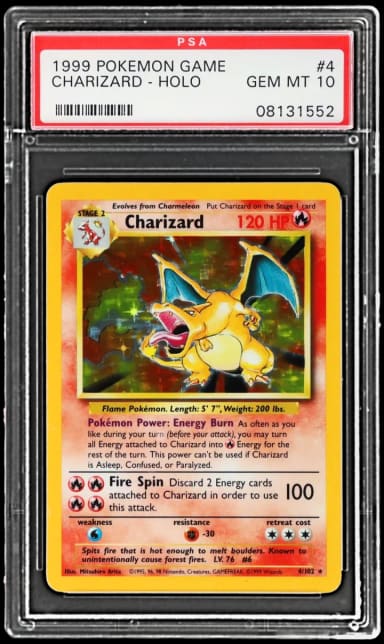
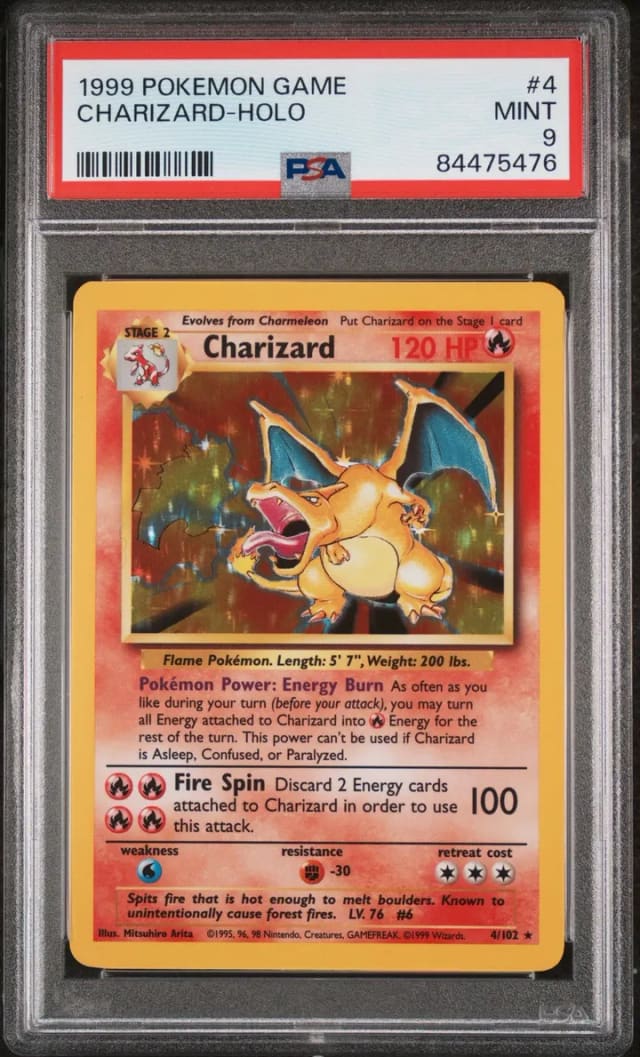
A PSA 10 (Gem Mint) has four sharp corners, a clean surface with its original gloss, and centering of roughly 55/45 or better on the front. A PSA 9 (Mint) is the same card with one minor flaw: a print that sits slightly off-centre, a tiny touch on one corner, or a faint print spot. Inside a slab, at arm’s length, most people cannot tell the two apart.
PSA has no 9.5, so there is nothing between them. A card that just misses a 10 is a 9, and the label is what the market prices. The full scale is in the PSA grading scale explained.
02
The gap on real cards
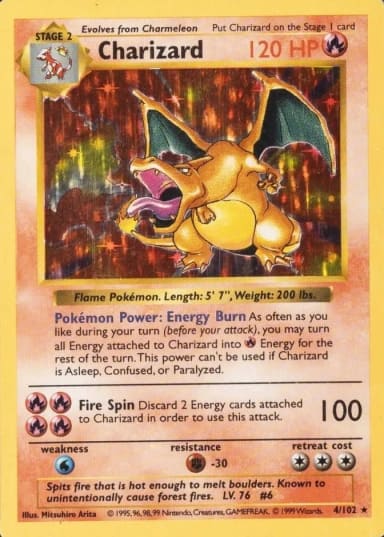
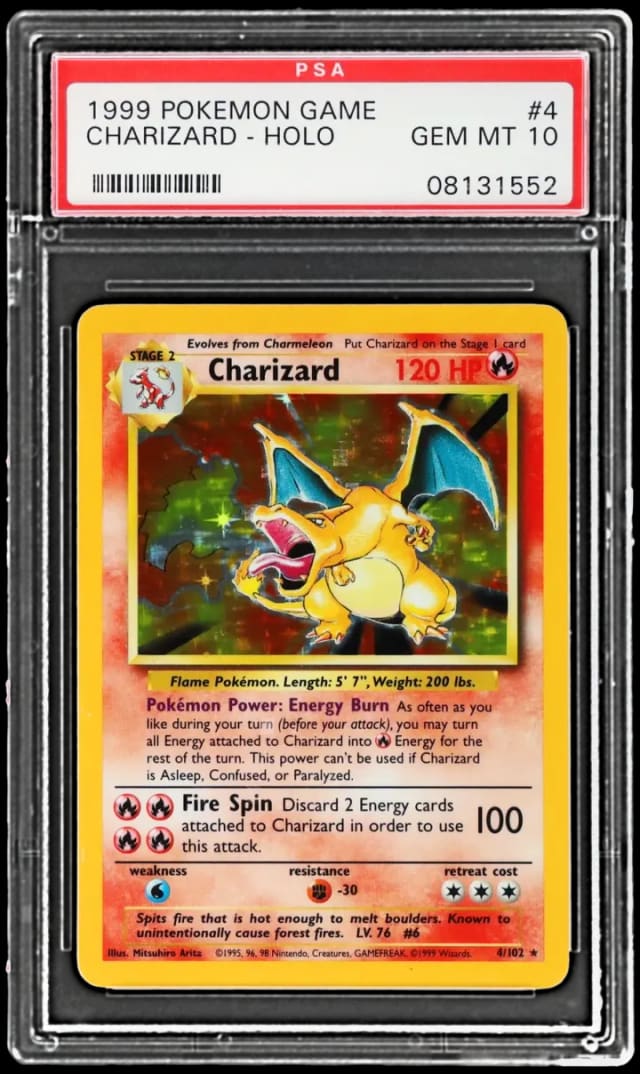
The examples below are computed from recorded sales, and refresh as new sales arrive, from a list of widely traded Pokémon cards that runs from 1999 Base Set holos to 2025 releases. The three cards at the top are picked automatically to show the range: the smallest gap, the middle one and the widest.
03
Why the gap exists
A 10 is the top of PSA’s scale, and collectors who want the best copy of a card have nowhere higher to go. Set registries reward the highest grade, and a 10 is the copy that is easiest to resell. All of that demand lands on a supply that is, for most cards, smaller than the supply of 9s.
04
What sets the size of the gap
The gem rate: the share of graded copies that came back a 10. It tells you how scarce the 10 is against the 9, and the chart above shows how closely the two move together.
| Situation | What the gap tends to look like |
|---|---|
| Most submissions gem (well printed modern sets) | Small. The 10 is the ordinary result and sells near the 9. |
| Few submissions gem (vintage holos, weak centering, print lines) | Large, often several multiples of the 9. |
| Only a handful of 10s exist | Set by one or two sales. Treat it as a range, not a price. |
Read the gem rate together with the count. A low gem rate on a heavily graded card can still leave thousands of 10s, and a premium built on scarcity fades as the population grows.
05
Which one to buy
The 9 is the value copy: the same card, nearly the same look, at a fraction of the price when the gap is wide. The 10 trades more often and is easier to sell, but its premium is the part of the price most exposed to new supply. On a modern card still being graded in volume the number of 10s rises every month. On a vintage card it barely moves.
06
Can a 9 become a 10?
Sometimes. Grading is done by people, and a strong 9 resubmitted can come back a 10. A 9 with a visible flaw will not, and each attempt costs a fee and weeks of waiting. Sellers who describe a slab as a strong 9 are asking you to pay for that possibility, and the completed sales show that the market mostly does not.
Every Assetra card page lists the latest sale, the estimated value and the population for each grade side by side. Start from the price hubs or search the sales ledger.
About this article
Written and checked by Assetra. Prices and populations come from completed sales and the graders’ population reports as recorded in Assetra’s ledger; see how Assetra builds its figures. Spotted a mistake? Tell us.